
Posted on December 12, 2019 by small20
Face Everything and Rise: The History of Purdue Dance Team
by Meaghan Tracy
This work relays the story of the Purdue Dance Team based off reports made by local newspapers, student newspapers and yearbooks. It is not affiliated with the current Purdue Dance Team. It does not represent the opinions, thoughts, or ideas of the current dancers or members of the Purdue Dance Team.
In April of 2019, the Purdue Dance Team travelled from West Lafayette, Indiana to Daytona Beach, Florida to compete in a national dance competition hosted by the National Dance Alliance. With two competition routines choreographed and one full year of hard work to back them up, twenty-four dancers boarded their plane at Indianapolis International Airport, donning t-shirts with the motto, “Face Everything and Rise” printed on the back. But what led up to that 6:30 am flight? What does that galvanizing statement stand for?
To this day, over 51 years of history stand behind the Purdue Dance Team. Within that time, the dance team has faced three name changes, two coaches, approximately 300 dancers, and twenty national dance competitions. In addition, numerous obstacles, controversies and challenges have stood before the team, some within the team’s control, some outside of the team’s hands. However, regardless of outside influences, the team continues to overcome difficulties with tenacity, dedication, and dignity, ensuring that the team can indeed face everything and rise.
“We would like to end up with 50 girls but if 300 really good-looking, fired-up girls show, then we could up the number.”(1)
The 1960s marked a time of prosperity within Purdue Athletics. By the end of the decade, the Purdue football team was thriving under Jack Mollenkopf with more wins than losses, high attendance, and one Rose Bowl appearance. At the beginning of the 1968-1969 football season, the Pep Committee, a student organization sponsored by the Purdue Athletic department, identified one need to make the Purdue Athletic experience even more valuable and that was another spirit team to make an appearance on the field beside the cheerleaders. Tim Richardson, the Pep Committee member in charge of this new project, and Tom Ballew, the president of the Pep Committee, spearheaded this initiative, notifying sororities across campus of their efforts to recruit a new pep squad, to be known as the Pep Girls. Female students from various sororities on Purdue’s campus showed up at Lambert Fieldhouse to interview for a position as a Pep Girl. From the ninety who attended, 35 women were offered spots on the team, their names were published in the next issue of the Purdue Exponent for all to see.(2)
“‘Communication breakdown’ Clouds Pep Girls Selection” was the title of Purdue Exponent’s front-page story on October 3rd, 1968. The Pep Committee was under fire for failing to inform girls from residence halls, co-operatives, and two sororities, Alpha Delta Pi and Pi Beta Phi, about the Pep Girls’ audition.(3) One co-ed claimed it was “terribly biased and unfair” that not all female students had the chance to interview. Tom Ballew went on record saying that he was under the impression all girls had been contacted, and described the mistake as a “communication breakdown”.(4) In order to correct the mistake, the Pep Committee offered a second audition at Lambert Fieldhouse for girls who were unable to make the first audition to try out for the team. Each auditionee was interviewed by the Pep Committee regarding their background and experience on campus and was then prompted to pretend to sell a pep button to an uninterested Purdue fan. After the second audition, the Pep Girl roster was finalized with 60 girls total. These girls would continue to promote school spirit by selling pep buttons, performing skits at residence halls, decorating locker rooms, and helping in the planning of “pep-ins”.(5)
Each girl was also responsible for paying $27.50 to purchase their uniform. The athletic director at the time, Guy “Red” Mackey, ordered the letters that would later be sewn to the front of the girls’ sweaters.(6) The Pep Girls made their first appearance at the Purdue versus Wake Forest football game on October 17, 1968. Although the girls were prepared and pepped up for their first appearance, the student body was still recovering from the previous week’s devastating loss to the Ohio State Buckeyes. During the game, the Pep Girls could be spotted among the fans in the stands, bringing volume and spirit to the students watching. The Purdue Exponent reported that the girls’ new found energy was what pushed the Boilermakers to beat Wake Forest in the last quarter by one point.(7)
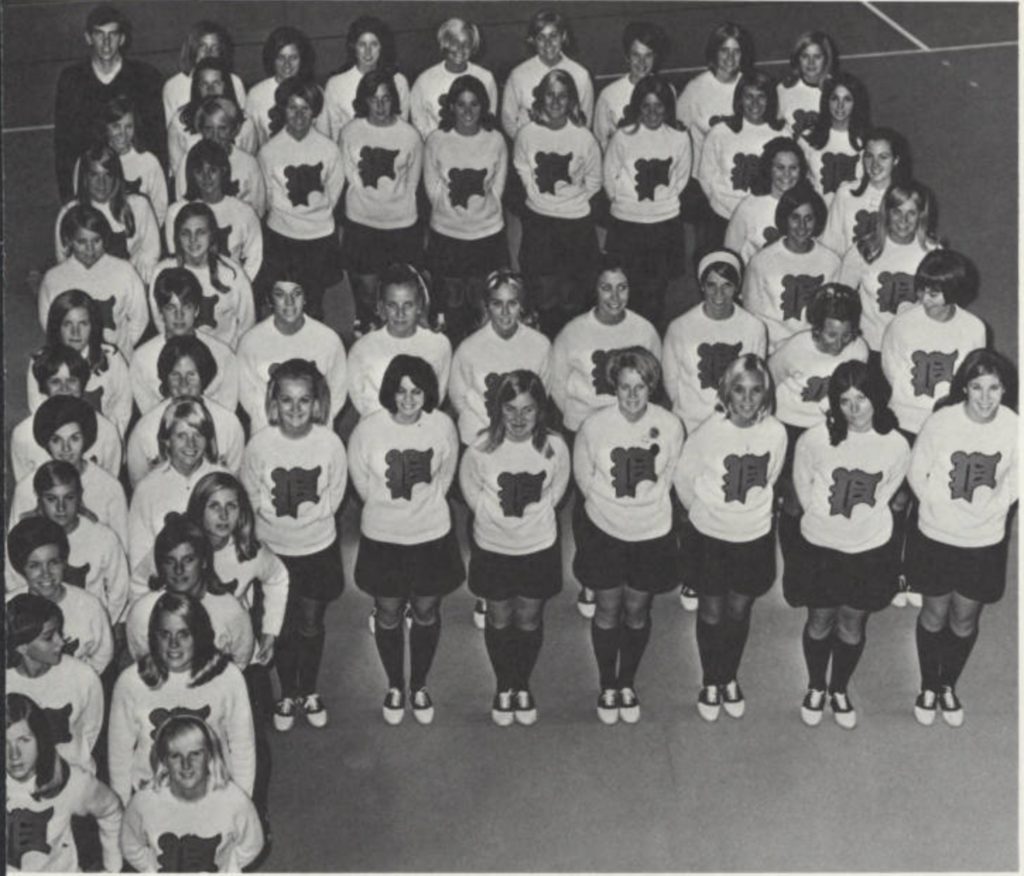
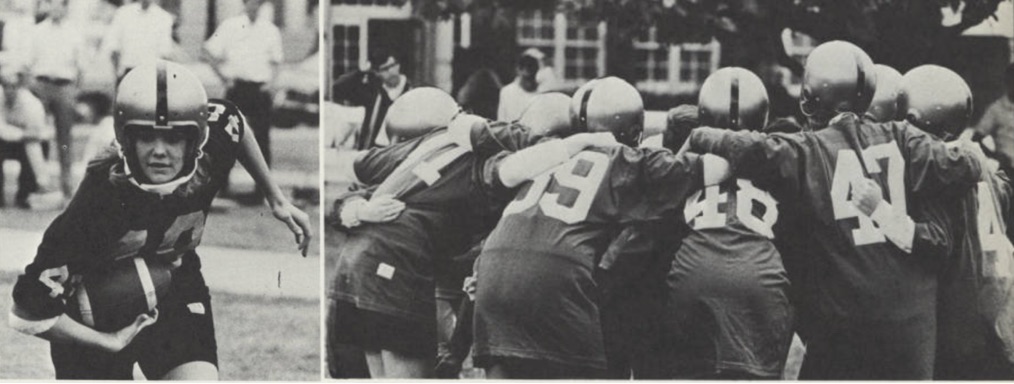
With a successful first appearance, the Pep Girls firmly secured their spot as the university’s new spirit squad. But they didn’t restrict their appearances to football; they also attended pep-ins, club sport events, athletic department events, and other pre-game festivities. They decorated the athletes’ lockers, served dinner to the football players the night before a game and sold pep buttons in the Purdue Memorial Union. In November of 1968, the Pep Girls promoted the Indiana-Purdue football game at Ross Ade Stadium by having a mock scrimmage on Memorial Mall. Onlookers watched as the girls dressed in home-made jerseys and helmets, ran around the field with football in hand.(8) Most left the scene cheerful and ready to watch the Boilermakers take back the Oaken Bucket from the Hoosiers, 38-35.(9)
The second season brought new changes for the Pep Girls. Their responsibilities extended to away games, and the team purchased new uniforms to keep their look fresh. Their new outfits were made up of black sweaters with white stripes and black knee-high socks finished off with saddle black oxford shoes.(10) However, because their uniform lacked any indication of Purdue University, many fans found the girls to be unrecognizable on the field. One Purdue fan stopped the girls at the Vanderbilt game and asked if they were in support of the Commodores or the Boilermakers.(11) The uniforms were discontinued for the next season.
“Back your Baby Boilers!”(12)
As the Pep Girls entered their third season, the sophomore student council saw fit to form a new dance team that would be special for Purdue’s freshman athletics. This new pep team, which had no connection to the Pep Committee, was comparable to the Pep Girls in that they would decorate locker rooms, sell pep buttons and attend freshman pep-ins. The team was made up of approximately 20 girls and would later be called the “Baby Boiler Boosters,” or “Tri-Bs” for short.(13) At this time, the Pep Girls still only allowed female students who were in their sophomore year or above. This new group not only helped recognize freshman athletics at Purdue, but also gave freshman female students the opportunity to prepare for their Pep Girls audition.
Nevertheless, the Tri-Bs, which only lasted about five seasons on campus, saw their fair share of backlash. “Tri-B Selection Called Racist,” was the title of Kelly Graham’s 1972 article in the Purdue Exponent.(14) In their third season on campus, the Tri-Bs held an information session on campus to recruit freshman students to join the pep squad. In attendance was Keoppia Merrill and Shirley Booth, two African American freshmen, interested in auditioning for the Tri-Bs. Keoppia explained to the Exponent that the black candidates were given the short statement of “don’t call us, we’ll call you” when they asked about the next steps needed to become a member of the team. Shirley explained that they were basically left in the dark when it came to when and where meetings were held, causing them to miss the audition completely. The girls found out that the audition already happened and the all-white team was already selected via a paper list posted in the Stewart Center window. Out of the 150 females that auditioned, 41 girls were selected; according to the Tri-B president of the time, no black female students petitioned to be on the team.(15) In contrast, the Pep Girls welcomed their first African American member in 1970.
“No person in the United States shall, on the basis of sex, be excluded from participation in, be denied benefits of, or be subjected to discrimination under any education program or activity receiving federal financial assistance.”(16)
In 1972, the Higher Education Act was passed by the federal government. Within this act was Title IX, a section of the act which ensured that women had equal opportunities in higher education, including in both academia and athletics. In athletics, Title IX stated that the proportion of female sports to male sports had to reflect that of the school population. Purdue, at the time, was 65% male and 35% female. This meant that many new changes occurred within the Purdue Athletic department including implementing any and all female sports, starting with women’s basketball, swimming, field hockey, and track and field.(17) Also, in 1975, the Pep Girls changed from under the direction of the Pep Committee to the supervision of the Purdue Athletic Department.(18) Whether this move was in response to Title IX is unclear, but it did help establish that the Pep Girls were on campus for the long run.
While the Purdue Athletic Department was going through numerous internal changes, the Pep Girls were going through changes too. The largest change was what the Pep Girls were going to be called. From Pep Squad for one year, to Pepsters, to Pep Squad for another two years, to Pepsters for two more years, it seemed as though the team could not make a decision on what to be called. However, even though it seemed indecisive on the team’s part, the school still continued to call the team the Pep Girls, until 1983 when the team settled on the name, “The Boiler Babes.”
In addition, a new dance team formed on campus in 1980 known as the Purdue Golduster Dance Team. The Goldusters were, and still currently are, a unit within the Purdue All American Marching Band. They perform at school events alongside the Purdue Twirling team, Miss Boilerette, the Golden Girl, the Girl in Black, the Silver Twins and the Purdue Silks Color Guard. They also do their own performances at basketball game timeouts and half times.(19) With the addition of the Purdue Golduster Dance Team, Purdue now had three teams dedicated to spirit at athletic events: the Boiler Babes, the Goldusters, and the cheerleading team.
“It’s sad enough that–according to the caption in the Oct. 3 Exponent’s front page photo–a Purdue student has, in this day and age, allowed herself to be called ‘a Boiler Babe’ for three years. Even sadder is that she’s a ‘senior in early childhood education,’ and thus will, I suppose, be taking her sexist values she’s been comfortable with here when she starts teaching little kids next fall.”(20)
With a new name came new changes to the team. The team’s uniforms changed from the classic sweaters of the sixties and seventies to the leotards of the eighties. The audition process changed as well. Before, girls would be judged on their interview, petition, ability to sell a pep-button and then on their spirit for Purdue. Now, under the watchful eye of Sally Elliott Combs, the director of women’s intramural sports, the potential Boiler Babes were judged on body proportions, presentation, spirit, interview, and lastly, dance ability. Girls were chosen by Sally Elliott Combs, former Boiler Babe captains, and representatives from football, basketball, and volleyball offices.(21)
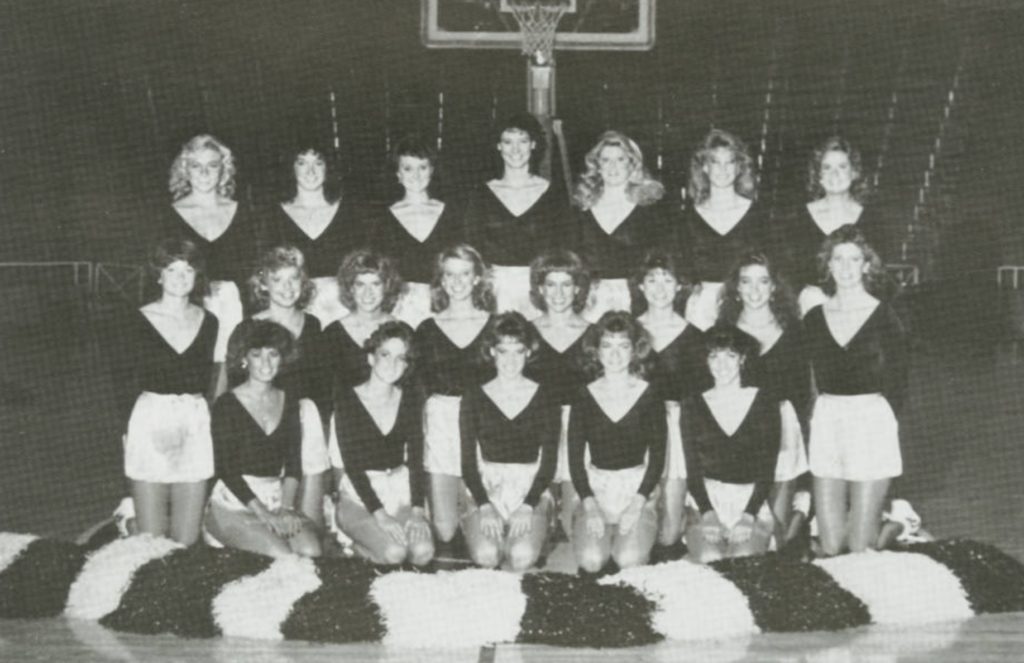
The Boiler Babes also took on more appearances outside of Purdue athletics. One appearance in particular was to welcome United States President Ronald Reagan at the Purdue Airport in 1983. Ronald Reagan was invited to speak at Mackey Arena, and the Boiler Babes enthusiastically accepted the responsibility of greeting the president off the plane. As the girls waited at Purdue Airport on the tarmac, they attempted to prepare by warming up and stretching. They threw their poms in a pile and almost immediately, they were approached by the United States Secret Service who questioned the motives of the stunned, innocent Boiler Babes in putting the poms in a pile. When President Reagan arrived, the girls lined up and cheerfully welcomed the president to campus. He got into a car which drove him from the airport off of US-52 to Mackey Arena. The Boiler Babes, who were determined to hear him speak, ran all the way across campus to hear the end of his speech.(22)
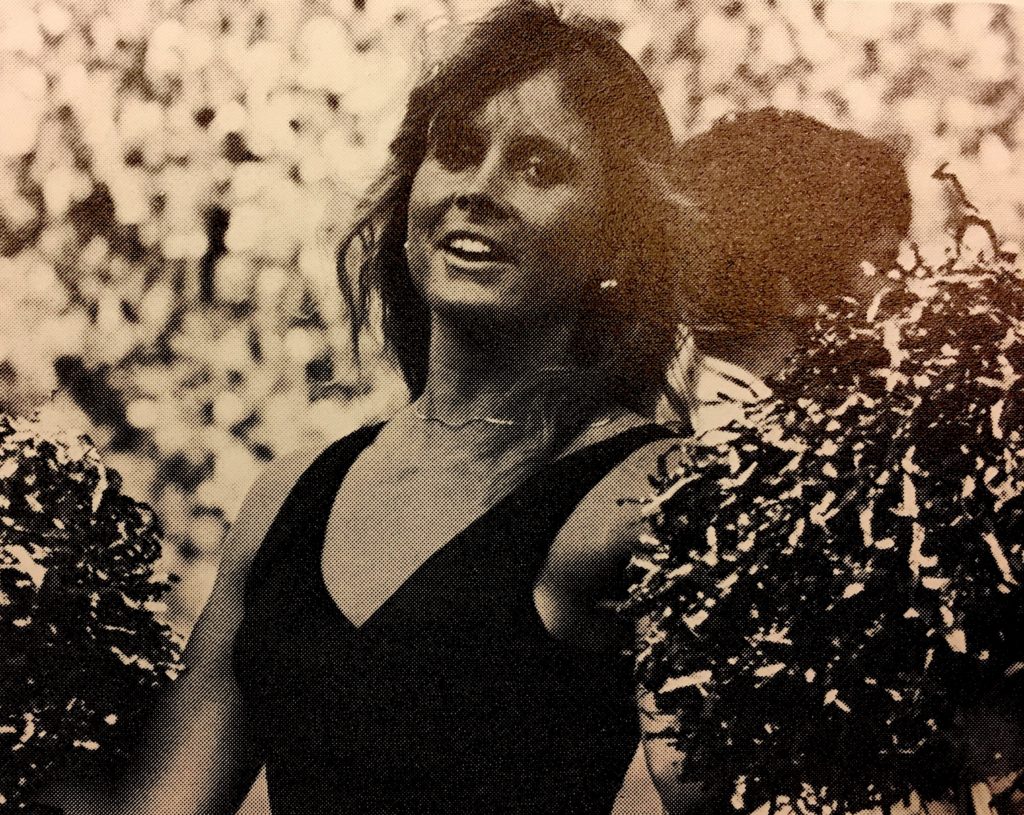
Even though the Boiler Babes were chosen to make many appearances, not all reactions were positive to the Boiler Babes’ new look. For instance, one critic, a professor in political science, submitted his opinion to the Purdue Exponent, explaining his view that the Boiler Babes were a symbol of sexist values.(23) At football games, students had taken to throwing frozen marshmallows and harassing the Boiler Babes as way of entertaining themselves when Purdue football was not performing up to par.(24) Regardless, the Boiler Babes were still known for the fun times, they were also excellent performers and dancers. They attended competitive camps hosted by the Universal Dance Alliance alongside the cheer team and Purdue Pete. The Purdue Exponent reported that the team received top awards for their dancing in 1988.(25)
In 1991, Purdue’s athletic director, George King, announced his retirement. In 1993, a new athletic director took office named Morgan Burke. Burke was a Purdue graduate of 1973 and a member of the Purdue swimming team during his time as a Boilermaker. After graduation, he managed Inland Steel Co., a large steel manufacturing company, and was known as a man with a sharp eye for finances and budgets.(26) The future of Purdue Athletics looked bright, as Purdue was on its way to Title IX compliance, Purdue basketball was prospering under Gene Keady, and a new athletic director meant that great changes were ahead.
“They provide the same positive effects as the cheerleaders do, and we feel we can do a better job by putting our efforts towards the cheerleaders.”(27)
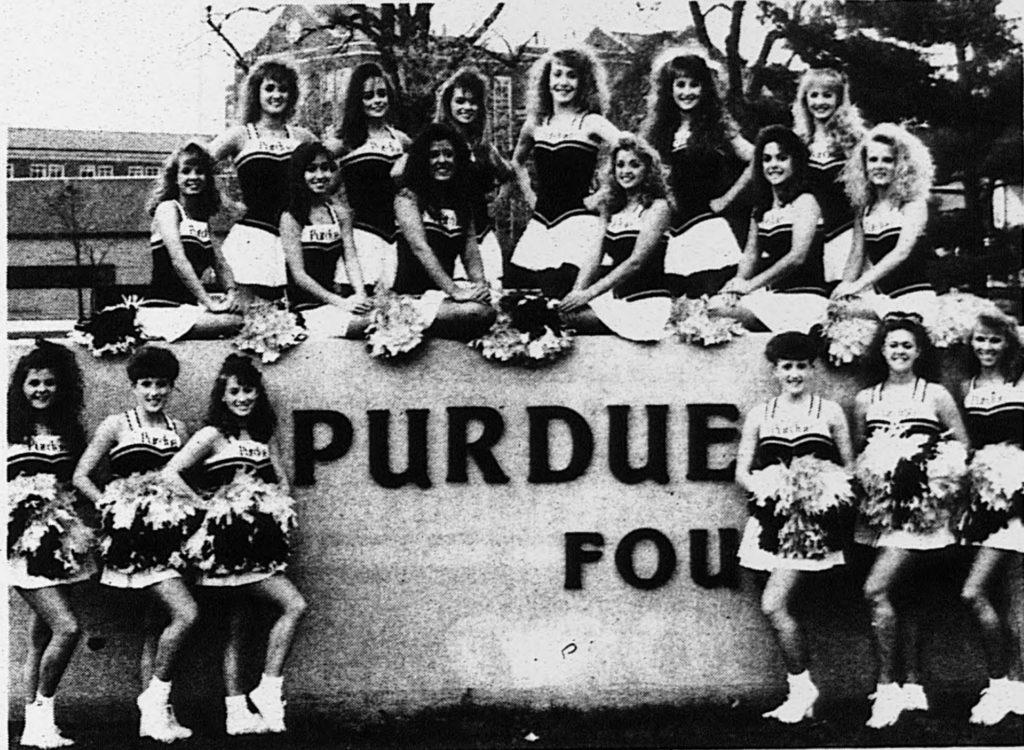
Unfortunately, the future looked daunting for the Boiler Babes. About a month after the administration switch in the athletic department, the captains received word that the athletic department would no longer sponsor the dance team. The Purdue Exponent reported that the team’s advisor had presented a new budget of $5,000 and asked about getting a coach as well as becoming equal with the cheerleading squad. After much deliberation, it was decided that the athletic department could not provide these things to the dance team, and would not sponsor the team any longer.(28) “We are not trying to discipline or kick them out. We are focusing on covering more events, and expanding the cheerleading squad will do that,” stated Jim Vruggink, the Purdue athletics public relations director.(29) Morgan Burke added that, “a single cheerleading group operating under a common set of policies will best meet our guiding principle.”(30) The cheerleading squad was set to expand by six members the following season.(31)
In the midst of this transition, the team had changed its name from the Boiler Babes to the “Purdue Dance Team,” in an attempt to have a more professional name when attending competitive camps.(32) Members of the Purdue Dance Team felt as though they had been abandoned and decided that they would finish out the basketball season in their warmup suits behind the sidelines. “We are hoping to get a response from angry alumni and former members to write on how they feel about this. We are not rebelling; we just want the crowd to wonder what is going on behind the scenes,” Karen, a junior on the team, reported to the Purdue Exponent.(33) However, they soon were faced with the fact that they’d either need to find another department to sponsor them or would have to “retire their pom-poms at the end of the season.”(34)
“Things took an upswing when we learned all we needed was an advisor, not a sponsor,” Susan, a member of the Purdue Dance Team stated.(35) The team realized that they did not need to have a university department to support them and instead could continue on as a student organization. The Purdue Athletic department also offered their help by continuing to work with them by allowing them to use Mollenkopf Athletic Center for practices and maintaining their space on the football field.(36)
The athletic department continued to prosper after 1993. The football team did better the following season, the department announced a new $7 million project to build the Morgan Burke Aquatic Center, and they added two new women’s sports; softball and soccer.(37)
However, was cutting the dance team from the roster a violation of Title IX? The answer is: it’s complicated, but no. Title IX only requires that women are given equal opportunities as their male counterparts. Specifically, athletic departments are required to give equal treatment to men and women in regard to equipment and supplies, practice times, travel allowances, academic resources, coaching, facilities, medical services, publicity and promotions, support services and recruitment opportunities.(38) Title IX does not define what is considered a sport and leaves it up to the interpretation of the executor to decide what is considered a compliant sport. Is cheer and dance considered a sport? Currently, dance has not been tried in any court of law to be considered a Title IX sport. However, in 2012, the Second US Circuit Court of Appeals determined that at this time, cheerleading has not met the requirements of a varsity sport due to disorganization, no post-season structure and no standardized rules.(39) Based on this ruling, Purdue did not violate Title IX by removing the dance team from its roster, and no article was published questioning if this was a violation of the act.
The new Purdue Dance Team held auditions in April of 1993. Although the team’s future was unclear, the auditions were extremely successful with over 150 girls in attendance. Out of the 150 auditionees, eleven girls were chosen. For this audition, the captains made it a priority for the selected girls to have more dance background and less cheer background in order to differentiate the team from the cheerleading squad.(40) One of the eleven members was an incoming freshman, the first incoming freshman to join the Purdue Dance Team in twenty-five years.(41)
The team continued on as a self-funded student organization for the next ten years, fundraising through fraternity serenades and kids’ clinics among other ways. The team also made appearances in professional arenas including at Bankers Life Fieldhouse in Indianapolis and the United Center in Chicago.(42) In 2000, the team made the decision to take the team to the next level and compete at the annual national competition hosted by the National Dance Alliance. This was the start of the Purdue Dance Team that we know today.(43) Since 2000, the team has competed in twenty national competitions in styles such as jazz, pom, hip hop and team routine. In 2017, the team welcomed its first male dancer, making the formally all-female squad into a co-ed competitive team.
The dance team continues to face every obstacle with tenacity and determination, persevering through challenges and overcoming each with pride. In 2019, the team competed in a contest to win free airline tickets to nationals in Las Vegas, Nevada. In an effort to introduce what Purdue Dance Team stands for, the team submitted a two-minute video that was narrated by the team’s coach. The narration defines exactly what it means to be a Purdue Dance Team member.
“As ambassadors of Purdue University, we encompass what a Boilermaker truly is. But what is a Boilermaker? By definition, it is a locomotive that has power of progressive movement. It also has drive, commitment, and determination to maneuver through tough terrains. This is the essence and the spirit of a Boilermaker and the Purdue Dance Team; the drive. It is what we do every day, every practice and every performance. The hard work and countless hours to perfect our craft. We give everything we have for our team, for our university, for our families, and for our alumni who have paved the way. Our commitment to one another to work hard, like that locomotive, to power through every obstacle, challenge, struggle and hardship together as a team. Our determination has set fire in our eyes as we step on the field, the court or the stage. The motivation to articulate our drive, our commitment and our determination through dance to display the heart and spirit of this team. Our history grounds us. Our values define us. The Boilermaker spirit motivates us. And the result? Twenty-two dancers. One coach. Full steam ahead, showing the world what makes us, us.”(44)

- Salter, Stephanie. “‘Communication Breakdown’ Clouds Pep Girl Selections,” Purdue Exponent, October 3, 1968.
- Salter, Stephanie. “‘Communication Breakdown’ Clouds Pep Girl Selections,” Purdue Exponent, October 3, 1968.
- Salter, Stephanie. “‘Communication Breakdown’ Clouds Pep Girl Selections,” Purdue Exponent, October 3, 1968.
- Salter, Stephanie. “‘Communication Breakdown’ Clouds Pep Girl Selections,” Purdue Exponent, October 3, 1968.
- Salter, Stephanie. “‘Pep Girl’ Tryouts to be Held Tuesday,” Purdue Exponent, October 9, 1968.
- Salter, Stephanie. “‘Pep Girl’ Tryouts to be Held Tuesday,” Purdue Exponent, October 9, 1968.
- Woods, William. “Girls Keep Campus Fired Up After Loss,” Purdue Exponent, October 25, 1968.
- “Mr. I.U., Miss I.U. To Highlight Preparations for Game,” Purdue Exponent, November 15, 1968.
- 1969 Debris Yearbook, 1969, Debris Yearbook Collection, Purdue Archives and Special Collections, Purdue Libraries. 143.
- Mitchell, Marilyn. “New pep girls to extend activities to away games,” Purdue Exponent, May 14, 1969.
- “Students fail to recognize Purdue pep girls by dress,” Purdue Exponent, October 9, 1969.
- Wallace, Jim. “Baby Boiler Boosters in their second year,” Purdue Exponent, January 7, 1971.
- Wallace, Jim. “Baby Boiler Boosters in their second year,” Purdue Exponent, January 7, 1971.
- Graham, Kelly. “Tri-B selection called racist,” Purdue Exponent, October 25, 1972.
- Graham, Kelly. “Tri-B selection called racist,” Purdue Exponent, October 25, 1972.
- Title IX Frequently Asked Questions,” NCAA, accessed October 20, 2019.
- Estes, John et al. Purdue Athletics: A Century of Excellence. (West Lafayette: John Purdue Club Office and Athletic Relations Public Office, 1987).
- “Rumors aside, dance team alive,” unknown newspaper clipping
- “Purdue Golduster Dance Team,” Purdue Bands and Orchestras, accessed November 30, 2019.
- Stegenga, James. “Boiler Babes suggest sexist values,” Purdue Exponent, October 11, 1983.
- Batrich, Teresa. “Boiler Babe rivals drilling for tryouts in early workshops,” Purdue Exponent, March 30, 1983.
- “Purdue Dance Team: 50th Reunion,” Youtube, December 28, 2018.
- Stegenga, James. “Boiler Babes suggest sexist values,” Purdue Exponent, October 11, 1983.
- Weigner, Jeff. “Hicks denounces audience conduct,” Purdue Exponent, September 17, 1982.
- Getts, Matt. “Cheerleaders/Boiler Babes/ Purdue Pete win top camp awards,” Purdue Exponent, August 28, 1988.
- “Talks commence as AD committee finds man for job,” Purdue Exponent, October 29, 1992.
- Parney, Lisa. “Dance team performs last season,” Purdue Exponent, February 16, 1993.
- Parney, Lisa. “Dance team performs last season,” Purdue Exponent, February 16, 1993.
- Parney, Lisa. “Dance team performs last season,” Purdue Exponent, February 16, 1993.
- Parney, Lisa. “Dance team performs last season,” Purdue Exponent, February 16, 1993.
- Brann, Matt. “PU Dance Team succeeds despite several changes,” Purdue Exponent, September 22, 1994.
- Parney, Lisa. “Dance team performs last season,” Purdue Exponent, February 16, 1993.
- Parney, Lisa. “Dance team performs last season,” Purdue Exponent, February 16, 1993.
- Parney, Lisa. “Dance team performs last season,” Purdue Exponent, February 16, 1993.
- “Rumors aside, dance team alive,” unknown newspaper clipping.
- “Rumors aside, dance team alive,” unknown newspaper clipping
- Kubat, Tom. “New swimming pool would boost coaches’ morale,” Journal & Courier, May 17, 1993.; Vicroy, Kevin. Purdue Athletics: Since the Beginning. West Lafayette: John Purdue Club Office and Athletic Relations Public Office, 1996.
- Title IX Frequently Asked Questions,” NCAA, accessed October 20, 2019.
- “Court upholds cheerleading decision,” ESPN, August 12, 2012.
- Waibel, Judy. “Tryouts boost dance team,” Purdue Exponent, April 23, 1993; Kweskin, Alex. “PU dancer helps out at cheerleading camp,” Purdue Exponent, April 23, 1993.
- Oral History with Jenna Rickus, October 23, 2019.
- Cullen, Kevin. “Purdue teams to join the Bulls’ lineup,” Journal & Courier, October 20, 1997.
- Norberg, John. “Dedicated to Dance,” Journal & Courier, March 12, 2000.
- Walker, Mallori. “What makes PDT, PDT.” Purdue Dance Team Instagram, October 9, 2019.
- “Face. Everything. And. Rise. #ndanationals2019,” Purdue Dance Team Instagram, April 3, 2019.
Banner Image Reference in bold.
1969 Debris Yearbook, 1969, Debris Yearbook Collection, Purdue Archives and Special Collections, Purdue Libraries. 143.
Batrich, Teresa. “Boiler Babe rivals drilling for tryouts in early workshops,” Purdue Exponent, March 30, 1983.
Brann, Matt. “PU Dance Team succeeds despite several changes,” Purdue Exponent, September 22, 1994.
“Court upholds cheerleading decision,” ESPN, August 12, 2012. https://www.espn.com/college-sports/story/_/id/8245864/appeals-court-affirms-cheerleading-not-sport-title-ix
Cullen, Kevin. “Purdue teams to join the Bulls’ lineup,” Journal & Courier, October 20, 1997.
Estes, John, and Pence, Bob, and Vruggink, John. Purdue Athletics: A Century of Excellence. West Lafayette: John Purdue Club Office and Athletic Relations Public Office, 1987. 186-191, 201.
Getts, Matt. “Cheerleaders/Boiler Babes/ Purdue Pete win top camp awards,” Purdue Exponent, August 28, 1988.
Graham, Kelly. “Tri-B selection called racist,” Purdue Exponent, October 25, 1972.
Kubat, Tom. “New swimming pool would boost coaches’ morale,” Journal & Courier, May 17, 1993.
Kubat, Tom. “Women’s Soccer Keeps Boilers in Line.” Journal and Courier, April 19, 1997. https://www.newspapers.com/image/264425382/?terms=women%27s%2Bsoccer%2Bkeeps%2Bboilers%2Bin%2Bline
Kweskin, Alex. “PU dancer helps out at cheerleading camp,” Purdue Exponent, April 23, 1993.
Mitchell, Marilyn. “New pep girls to extend activities to away games,” Purdue Exponent, May 14, 1969.
“Mr. I.U., Miss I.U. To Highlight Preparations for Game,” Purdue Exponent, November 15, 1968.
Norberg, John. “Dedicated to Dance,” Journal & Courier, March 12, 2000.
Oral History with Jenna Rickus, October 23, 2019.
Parney, Lisa. “Dance team performs last season,” Purdue Exponent, February 16, 1993.
“Purdue Dance Team: 50th Reunion,” Youtube, December 28, 2018. https://www.youtube.com/ watch?v=fewl1XOnSyM&t=98s
“Purdue Golduster Dance Team,” Purdue Bands and Orchestras, accessed November 30, 2019. https://www.purdue.edu/bands/ensembles/auxiliaries/goldusters/
“Rumors aside, dance team alive,” unknown, n.d.
Salter, Stephanie. “‘Communication Breakdown’ Clouds Pep Girl Selections,” Purdue Exponent, October 3, 1968.
Salter, Stephanie. “‘Pep Girl’ Tryouts to be Held Tuesday,” Purdue Exponent, October 9, 1968.
Stegenga, James. “Boiler Babes suggest sexist values,” Purdue Exponent, October 11, 1983.
“Students fail to recognize Purdue pep girls by dress,” Purdue Exponent, October 9, 1969.
“Talks commence as AD committee finds man for job,” Purdue Exponent, October 29, 1992.
“Title IX Frequently Asked Questions,” NCAA, accessed October 20, 2019. http://www.ncaa.or g/about/resources/inclusion/title-ix-frequently-asked-questions#title
Vicroy, Kevin. Purdue Athletics: Since the Beginning. West Lafayette: John Purdue Club Office and Athletic Relations Public Office, 1996.
Waibel, Judy. “Tryouts boost dance team,” Purdue Exponent, April 23, 1993.
Wallace, Jim. “Baby Boiler Boosters in their second year,” Purdue Exponent, January 7, 1971.
Walker, Mallori. “What makes PDT, PDT,” Purdue Dance Team Instagram, October 9, 2019. https://www.instagram.com/tv/B3aBshKFIoq/?utm_source=ig_web_button_share_sheet
Woods, William. “Girls Keep Campus Fired Up After Loss,” Purdue Exponent, October 25, 1968.